
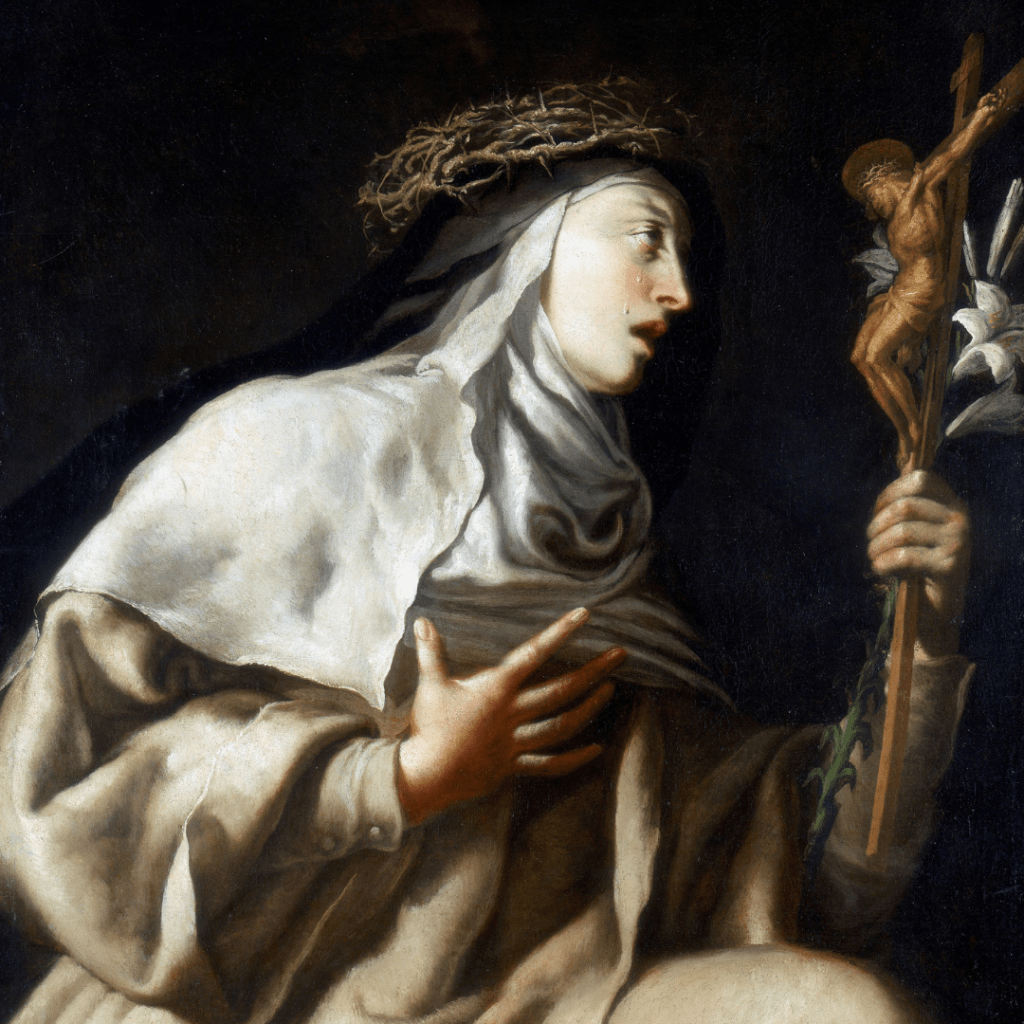
Can the Saints help change the modern Church?
Last week, I attended Mass for the umpteenth time in my life. I’ve always loved going to church, aside from my own spiritual beliefs, I’ve always drawn incredible comfort from the routine, singing the same songs which echoed in my childhood, breathing the fragrant air, uttering the familiar prayers and indeed, being part of a community. Its one of the few instances in modern life that you can be perfectly still. Silencing the noise which so often echoes in our lives and making time for soulful silence. It’s a beautiful thing.
Here’s the kicker; though I’m a devout Roman Catholic, I’m also gay. A lot of people might think this is a total contradiction, but honestly, it has never seemed so to me. And while ‘the church’ as a concept has a known stance against homosexuality, at parish level I’ve only ever known warmth, welcome and a shared desire to commune with God.
Until last week.
I’ve recently moved back home to Wales, and that has meant finding a new parish (or more accurately, returning to my old stomping ground). There, a parishioner made it quite plain that not only did they find my ‘lifestyle’ contradictory to the teachings of the church, but that they were certain I was going to hell, unless I ‘decide’ to change my ways. It wasn’t the most pleasant experience.
I don’t hold any anger toward the person who said this to me. It was upsetting, but there was nothing they were saying which was untrue from a strictly doctrinal perspective. Though the church has adopted a noticeably more welcoming stance towards LGBTQ+ people in recent years (with both Pope Francis and Leo claiming ‘todos, todos’ or that everyone should be welcome in church, and indeed, same-sex couples can now request a blessing) the doctrine remains unchanged. It was unnecessary for the parishioner to single me out, but their homophobia was a symptom of the wider issue of intolerance within some Christian circles.
Intolerance can seem to be growing. A glance at social media reveals Catholic influencers not only attacking LGBTQ+ but also promoting strict gender roles, intensely criticising other faiths and Christian denominations, endorsing hardline political movements and promoting a sharp distinction between ‘them’ and ‘us.’ These movements are intensely worldly, usually based on cultural and political preferences, rather than spiritual growth, but they are also often based on terrible understandings of theology.
The most common misconception often spread within these circles is that ‘church teaching is inviolable.’ Words to this effect are parroted constantly, it was quoted at me when the parishioner expressed their disapproval of me, it is circulated widely online. The idea that everything the church teaches now, has always been and will always be. ‘Teaching’ is clear, obvious, universally accepted and eternal.
Except this is palpably untrue.
Church teaching has always shifted and adapted. Even cornerstones of Catholicism often have surprisingly late dates of formalisation. Transubstantiation, the belief that the bread and wine transforms into the body and blood of Christ was not officially codified by the Church until the Fourth Lateran Council of 1215. This is not to say the belief was invented then, but rather for the first 1200 years of church history, it was possible to both be Catholic and to reject what is now the absolute heart of Catholic theological understanding. The Immaculate Conception of the Virgin Mary was not church dogma until much later, being officially proclaimed in 1854 while the Assumption of Mary was not formalised until 1950. I don’t write this to undermine or challenge these dogmas, but simply to make the point; church teaching changes.
And it should change.
Afterall, what is a church, except a community of believers? True, Catholics believe in Apostolic Succession, that our church leaders descend from a spiritual line harking back to St Peter. But that succession is merely a formal way of demonstrating that we are part of a community – a community consisting of our ancestors, as well as the other people in the church next to us. We learn from each other, both through modern friendships and through those who came before us. Every generation has faced new challenges, and the church has rightly adapted its teachings, practices and doctrines in order to answer, encourage and support its faithful. We are fortunate to be inheriting not only our faith from our forebears, but all the richness of accumulated wisdom which has come to us with it. If the church had never changed, our faith would be much poorer.
In the Catholic tradition (and in this instance, I mean the broader sense of Catholic, including Anglicans and Orthodox denominations) we also recognise Saints. If the church is a body of accumulated wisdom, then the Saints are its accumulators. Their lives, teachings, sufferings, triumphs all help us to understand our faith. Importantly, they remind us that the Holy Spirit is constantly at work, in every human being and across every generation. Evil constantly threatens our societies, yet there are always good, holy people called to be lights in the darkness. They are instruments of change, and it is often through their guidance that the church changes for the better.
There are thousands of examples we could explore, from St Francis establishing his order of poverty in contrast to the powerful and exuberantly wealthy papacy of Innocent III. Or St Hilda of Whitby who presided over the Whitby Synod and proved pivotal in ensuring England joined the Roman Catholic church, as opposed to the earlier form of Celtic Christianity. But a common factor in the lives of many Saints is the resistance, and at times the hostility, they face within the church. And it is this, often ignored, aspect of the Saints which is so powerful a lesson for us today.
St Catherine of Siena, for example, in addition to her profound text, ‘The Diologue of Divine Providence,’ was also credited for ensuring the Pope returned to Rome after a long period of schism in which a Pope also resided at Avignon, France. Gaining a reputation for holiness and charity in her own lifetime, she was also interrogated by Dominican authorities in 1374 to ensure she was not preaching heresy. Criticisms of her included that she sought to create her own power within the church, that she was a fanatic, and that her mysticism was inspired by the demonic, rather than God. These criticisms often came from prominent figures within the church hierarchy, including a priest and theologian called Lazzarino de Pisa, who sought to defame and refute her.
St Teresa of Avila is another powerful example. A mystic who penned a number of spiritual works, including her immortal ‘Interior Castle’ she also reformed the Carmelite order and produced a profound volume of prayers, directives and contemplations which are still used today by Catholics and non-Catholics alike in their attempts to deepen their spiritual practices.
The opposition to Teresa was intense. In 1576 she was forced into a ‘voluntary’ retirement by her own General Chapter (the governing body of her order) who also forbade the foundation of her reformed style Carmelite religious houses. Between 1575 and 1580, she was subject to investigation by the Spanish Inquisition, who feared her mysticism and her growing influence. She overcame these obstacles, and there are few within the church today who would fail to recognise her enormous contribution to Catholicism. Both Teresa of Avila and Catherine of Siena were the first women to be made Doctors of the Church in 1970, cementing their reputation as heroines of the Roman Catholic faith. Yet both of them, in their lifetime, faced intense opposition by church authorities.
Another, blunter, example can be found in St Joan of Arc. Immortalised as a French national symbol, Joan of Arc was a peasant girl, who claimed to have visions of St Michael, and occasionally also of St Margaret of Antioch and St Catherine of Alexandria. Famously, she was given command of the French army when the nation was close to collapse, and led them to victory, helping to bring the Hundred Years War to an end. Her demise is well-known, Joan of Arc was captured by the Burgundians, handed over to the English and she was burnt at the stake in 1431 aged just 19.
Except she was not killed simply by the English. St Joan of Arc was burnt as a heretic, and it was the church authorities, albeit English ones, who condemned her. Her visions were claimed to have been demonic, and in particular, Joan refused to submit to church authority, claiming that she would be judged by God alone. Her trial was not a fair one and was certainly influenced by the politics of her time. She was kept in horrific conditions, she was not given proper counsel, nor told fully what charges she was facing. She was also showed torture instruments to try and force her into accepting the authority of the court. Scholars who seek to defend the actions of the church, could rightly point to the fact that it was the English church who condemned Joan, and that they were undoubtedly acting on behalf of state authorities. But it is important to remember that regardless of the politics of the case, this was still a Catholic trial, it was the church which levied spiritual accusations against her. Joan could have been prosecuted under secular law. She could have been treated as a political prisoner. Yet the decision was made to prosecute her on religious grounds, Catholic clergy colluded with state power to ensure her downfall, and her death by burning was a style reserved for heresy. Joan of Arc was canonised in 1920, thus the church which had facilitated the death of Joan, now venerates her as a Saint.
The lesson here is explicit. In Catherine of Siena, Teresa of Avila and Joan of Arc we see three extraordinary women, called by God to shape the world around them. In all three Saints we see people who faced condemnation, criticism and accusations of heresy by church authorities. Yet in all three examples, they were proved to be right. They refused to be silenced, and it was the church who changed, listened and responded. As Catholics today, we are all so much richer as a result.
So let us, perhaps, hope that in our own time the Holy Spirit calls upon people to shake us in the church. Far from being a static, unchanging monolith, the church is a living, breathing institution, formed by the wisdom of the ages and the goodness of the people who are part of it. Change happens. Perhaps slowly, almost inevitably with resistance, but always for the better.
As St Julian of Norwich wrote after her 1373 vision, “All shall be well, all shall be well, all manner of things shall be well.”

Leave a comment